
GOPAL & FOMRA NITRIDING
(An ISO 9001:2015 Certified Company)
Since 1996
GOPAL & FOMRA NITRIDING
(An ISO 9001:2015 Certified Company)
Since 1996

Nitriding forms extremely hard nitride compounds on the surface, which significantly increases the surface hardness (often exceeding 1000 HV or 70 HRC). This hardness is often higher than that achieved by other case-hardening methods like carburizing.

The hard surface layer provides outstanding resistance to abrasion, wear, and erosion, drastically extending the component's lifespan. The nitride compound layer acts as a protective barrier against moisture, oxygen, and certain chemical agents, improving the material's corrosion resistance.

he formation of the nitride layer induces beneficial compressive residual stresses on the surface. These stresses counter tensile stresses that cause cracks, leading to a significant improvement (often 30% to 100%) in the component's fatigue life under cyclic loading.
Increase in NITRIDING Hardness the compound zone and the less is its thickness.
The higher the carbon and alloy contents of the surfaces treated
the higher is the hardness of the surface layer.
NITRIDING process produces a combination of a very hard compound zone of epsilon and the diffusion zone. The higher the carbon and alloy content of the substrate, the more compact is the
compound zone and the less is its thickness. The sulfur produces a unique porous surface layer.
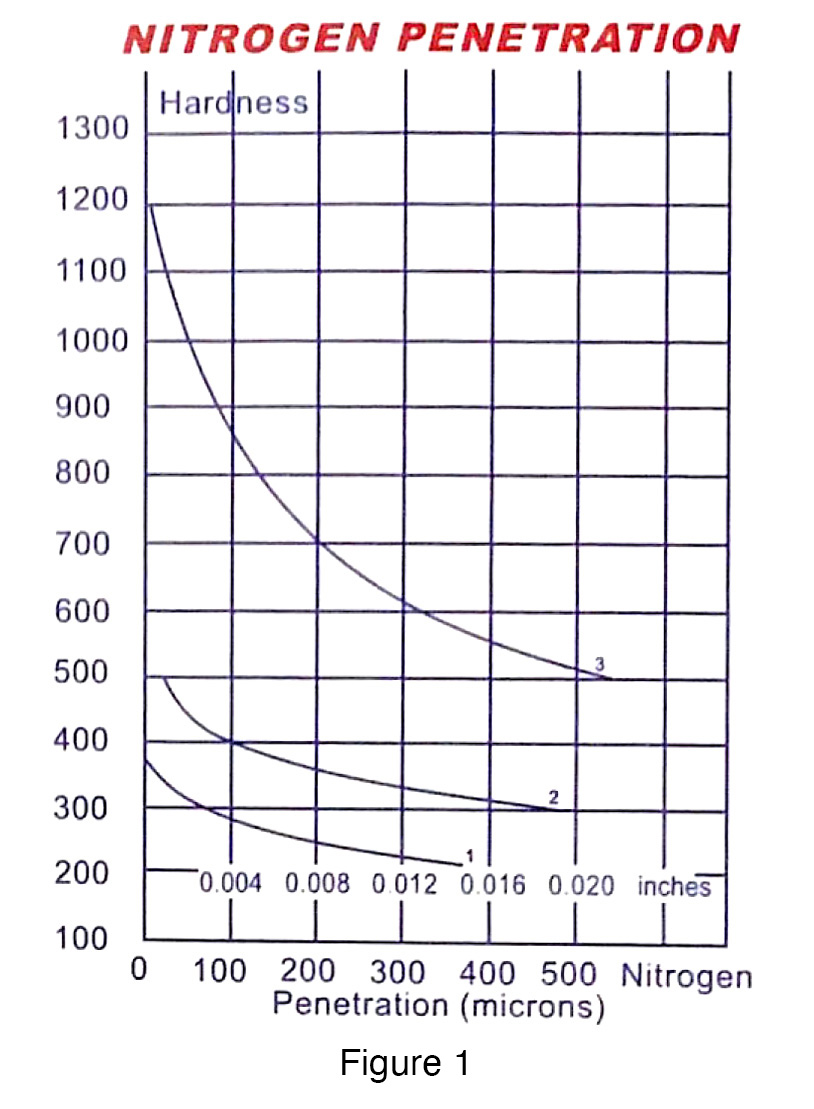
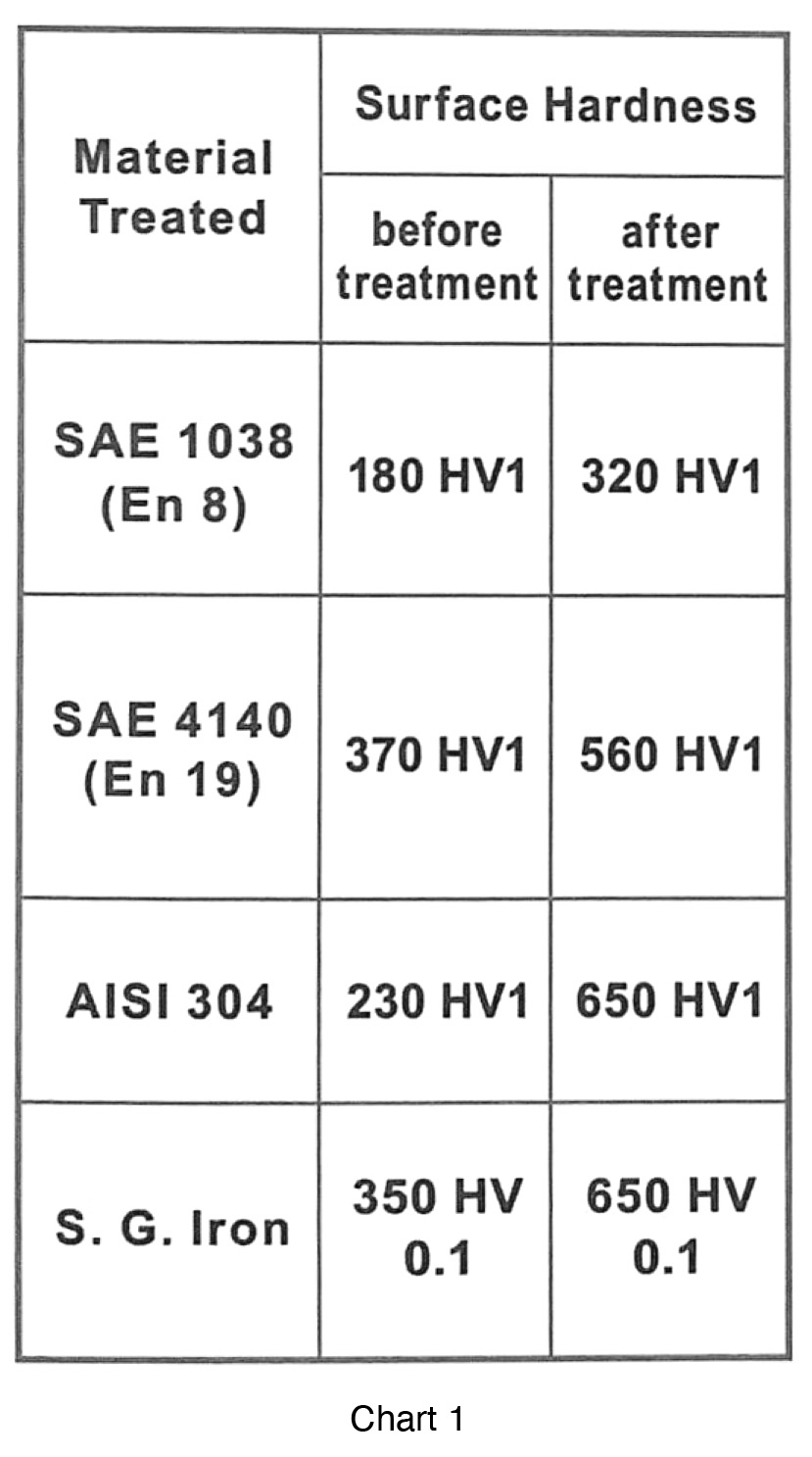
Relation between hardness & depth of nitrogen penetration of steels treated at 570°C for 2 hours.
1. EN8 (SAE 1038) 2. EN19 (SAE 4140) 3. H 11 Die Steel
DECREASE IN FRICTIONAL POWER LOSS
NITRIDING reduces coefficient of friction of treated surfaces. This results in reduced frictional power loss under identical conditions and contributes to increased fuel economy.
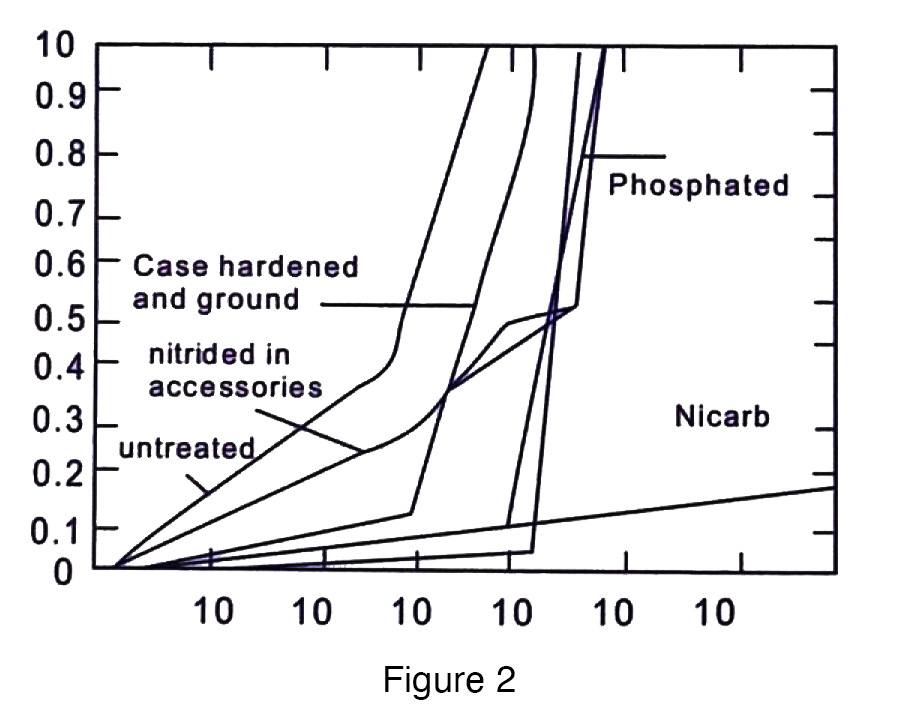
Resistance to adhesive and abrasive wear is increased enormously by NITRIDING process. The wear resistance is better than other treatment processes like phosphating, gas nitriding case hardening etc. as given in Fig. 2
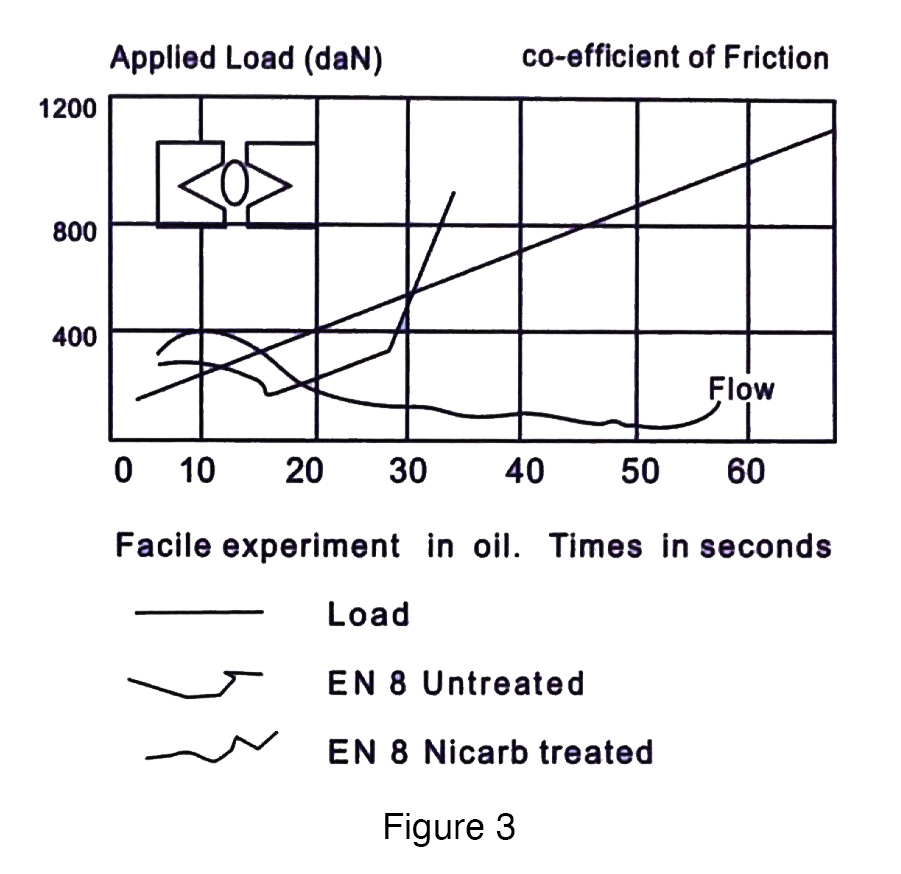
The sulfur compounds present in the surface layers inhibit 'metal to metal' welding and facilitates 'running-in'. Hence it completely eliminates problems of scuff and seizure (Fig. 3)
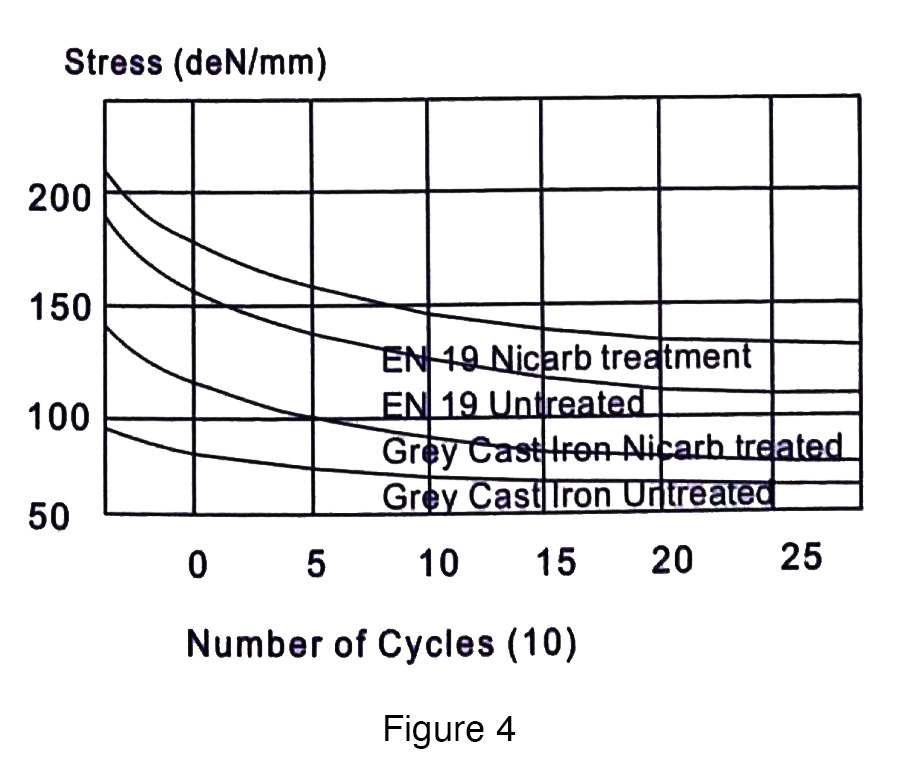
NITRIDING gives rise to residual
compressive stresses on the NITRIDING which increases the fatigue strength of treated components. (Fig. 4)
NUMBER OF REVOLUTIONS,
log scale
Amaler tests with 20 kg load on 0.15% C steel test pieces
subjected to various treatments using SAE 30 oil as lubricant.
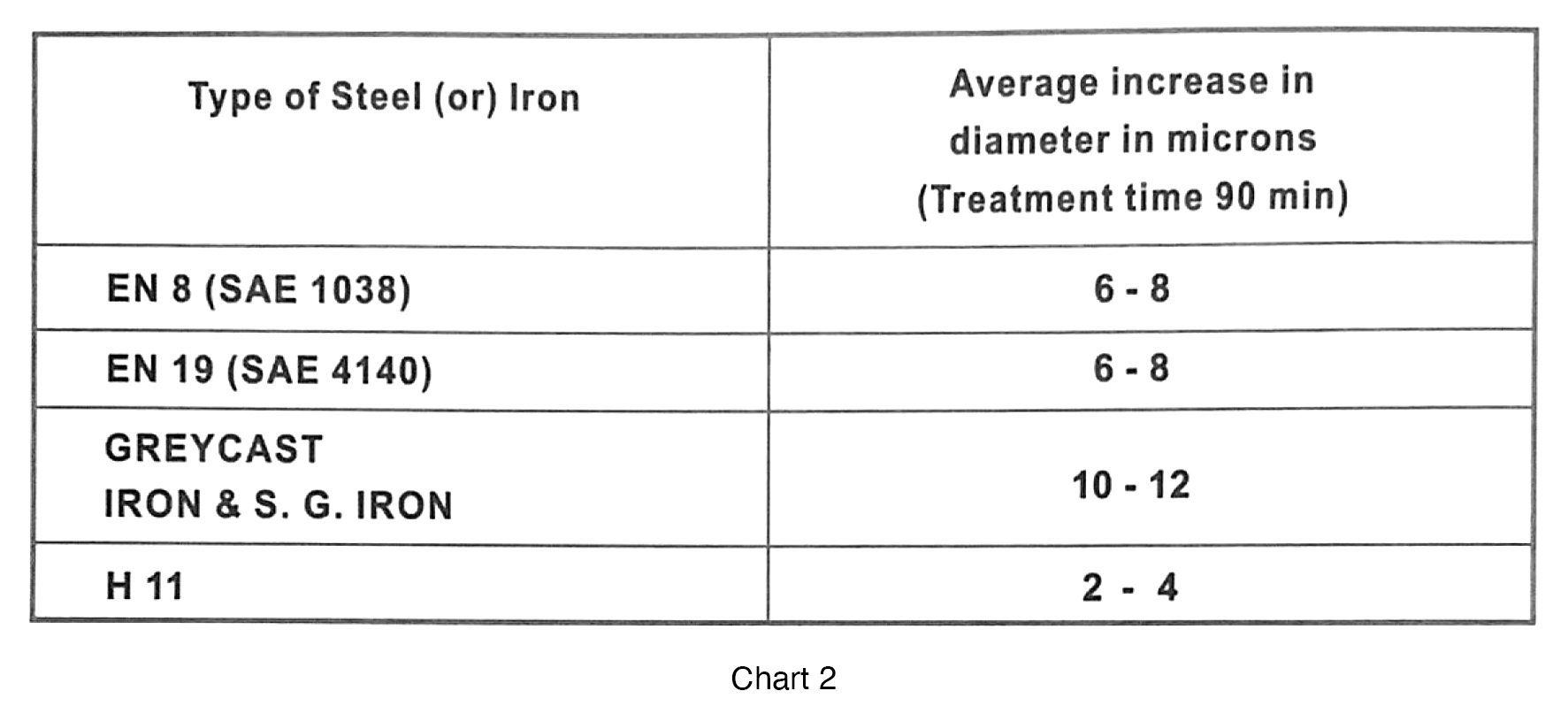
NITRIDING treatment gives rise to a uniform growth of components, this being independent of the shape and position in the bath during treatment, but differing in magnitude depending on the composition of the material (Chart-2)
The component to be treated by us should have been earlier stress relieved or tempered at a minimum temperature of 580°C for 3 hours minimum.